There are many reasons why what is proposed for the Boro Fields is good for Limerick if it can work for the site. But decisions on this site should not be allowed to be guillotined before proper consideration has been given to all aspects - the amenity needs of the local community and the housing needs of the broader Limerick public. This blog examines both.
Until recently, few people outside Janesboro were familiar with the Boro Field.
I’ve known it for over 40 years as a student in the CBS Sexton St, I crossed the nearby pedestrian bridge weekly going from Rathbane to catch a bus home at Colbert Station.
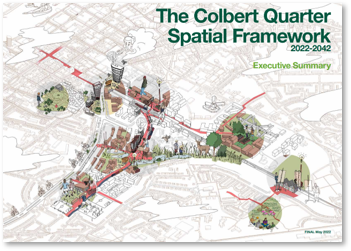
Even fewer were aware that these lands were zoned by councillors in the last council for high-density housing—or that they formed part of a wider plan for new amenities and investment under the Colbert Quarter Strategic Framework, aligned with the Limerick Development Plan adopted in 2022–2023.
That changed suddenly.
In recent weeks, opposition to development on these lands has emerged strongly after a private briefing on early ideas to councillors by officials.
Many residents I have spoken to have genuine concerns—and that is entirely understandable.
But what is equally clear is this:
Many people have not been given the full picture.
They have heard over and over what might be lost—but not what could be gained.
And in any debate of this importance, that balance matters.
Now just as the fuller picture is being developed by engineers and architects working with our officials and is being revealed to the public, the councillors opposed to the plans are panicking. They are asking their colleagues to a premature end to the discussion by trying to mandate that all further development work on the project by officials should end immediately.
A Change in Position—And the Importance of Full Information
The plans for Colbert Quarter, including development on the Boro Fields, are not new.
They were:
- publicly consulted on
- developed with expert input
- aligned with national policy and the Development Plan
- discussed repeatedly with councillors
- announced by the then Minister for Housing himself
Yet some of those who previously supported or engaged with these plans have now decided that they should be opposing them, even though the housing crisis has gotten worse and the need for investment greater.
That is their right.
But it is equally important that:
- Those councillors explain why they thought it was a good idea before and are now changing their minds and
- Residents are given the full context—not a partial one.
Because decisions of this scale should not be based on fear or incomplete information—but on a clear understanding of both opportunity and impact.
Why Build in Colbert Quarter?
Building in this area is not a sudden decision by LCCC or even a personal decision by me.
The development of Colbert Quarter has been:
- examined by independent experts
- supported by national policy
- endorsed through public consultation
- aligned with local planning frameworks
I will not hide that when I was chair of the LDA, I was supportive of this project.
Then six independent architects contributed to early design work in 2020, which included local consultation a significant part of which was led by Councillor Sarah Kiely.
After that the Land Development Agency developed the Spatial Framework in 2022 following extensive engagement and local consultation.
The vision was clear:
A new, integrated urban neighbourhood—delivering homes, amenities and opportunity in a central location.
Colbert Quarter offers what few sites can:
- City-centre proximity
- Access to transport (including future rail expansion)
- Walkability and reduced car dependence
- State ownership—reducing land costs
It was zoned accordingly.
And at the time:
Limerick Councillor officials backed the plans and no councillor proposed excluding the Boro Fields from development when the opportunity arose as the Development Plan was finalised at exactly the same time.
Why Include building on the Boro Fields?
Because the agreed masterplan identified it as part of a balanced approach.
This was not about building instead of amenities—but about delivering both.
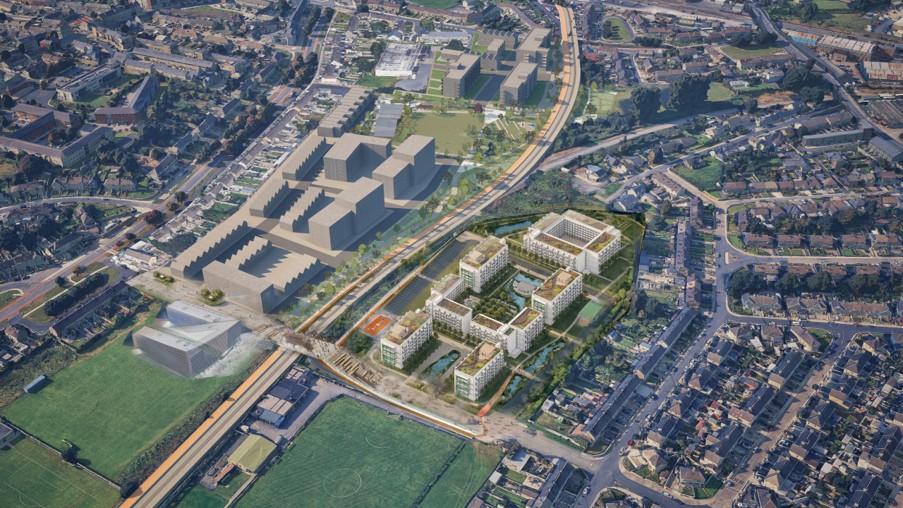
The framework includes:
- A new central park—the “green lung” of the area
- New sports facilities and upgraded playing spaces
- Better connectivity, including improved access across the railway and to neighbouring communities
- Landscaped public areas and walkways
Development enables investment, including in much needed amenities. It does not replace them.
And for too long, this area has not received its fair share.
For decades, budget decisions approved by those who controlled the council chamber, including Cllr Kiely and Cllr Slattery prioritised other parts of Limerick.
That is the legacy we must now address—not repeat.
But now things are changing and changing fast. And even planning for the new central park is likely to be applied for before the summer assuming all other plans are progressing in tow.
Do We Really Need These Homes?
Yes.
And this is the central issue.
Limerick is growing:
- A strong fast expanding jobs base
- Over 30,000 third-level students
- Increasing demand to live close to work, education and transport
But housing supply has not kept pace.
We have been delivering:
- ~1,000 homes per year
Thanks to years of underperforming in terms of housing delivery, we now need:
- up to 4,000 homes per year
That gap is the crisis.
And it has consequences:
- Rising costs
- Young people unable to stay
- Families struggling to find suitable homes
The Development Plan already recognises this reality with:
- High-density housing near the city centre
- Efficient use of serviced land
- Compact growth
Colbert Quarter is central to that strategy.
Without sites like this, the numbers simply do not add up.
Why This SMART Type of Housing?
We need a mix of housing—and we need it faster.
This overall development includes:
- Affordable rental and purchase homes
- Homes for working people
- Options for different household sizes
For this site, the plans are to focus mainly on rental homes for singles or couples. And importantly:
the plans introduce innovation to speed up delivery.
Modern construction methods—used across Europe—allow:
- faster build times
- consistent quality
- strong durability (60+ year lifespan)
Public response to early demonstrations of what these could look like has been very encouraging:
- 87% were positive
- 82% found the concept inspiring
- 72% described it as visionary
This is not about replacing traditional housing—
It is about adding capacity, quickly, where it is most needed and while other housing is being built.
The Bigger Picture
This is about more than one site. It is about whether Limerick can:
- meet its housing needs
- invest in long-neglected areas
- deliver at the scale required
Private delivery alone is not proving to be near enough.
The Council must step forward where the market is not delivering.
And importantly:
These are not speculative developments.
They will be:
- publicly managed
- maintained to a high standard
- designed to serve long-term community needs
This is about providing:
- homes for the “squeezed middle”
- stability for renters
- sustainable urban growth
A Note on Public Debate
In recent weeks, debate has become more heated.
That is not unusual.
But it does place a responsibility on all of us.
Residents deserve the full facts—not selective ones.
They deserve to understand:
- what is proposed
- what is not
- what benefits are included
- and what trade-offs exist
Because ultimately:
Good decisions come from informed communities.
Conclusion: A Choice for Limerick
This is not a simple decision.
There are valid concerns—and they must be heard.
But there is also a broader reality:
Limerick needs homes.
Limerick needs investment.
Limerick needs progress.
The question is not whether change will come—
The question is how we shape it in a way that is fair to all and serves the public interest best.
And that requires:
- openness
- honesty
- and leadership
Above all, it requires that we engage with the full picture.
Because:
Limerick does not need more people standing back—
it needs people willing to step forward and play their part in shaping its future.
As I said during my speech at the recent Mayor’s Charity dinner, Limerick’s time is now but to seize the opportunity we must all be working together and doing so not with self-interest in mind but with Limerick’s interest to the fore.
Limerick, April 19, 2026
