In this blog I confront the dilemna of how to make decisions about a project long in the making when circumstances change. Should we drive on or look at new alternatives? Can sometimes short term improvements be found while still adapting for new opportunities?
When Circumstances Change: The Challenge of Planning for Tomorrow
One of the admired city leaders of modern times, former Curitiba Mayor Jaime Lerner, often challenged public authorities asking them to stop framing decisions in terms of impossible choices.
For Lerner, the challenge for public leaders was often not making their decisions a choice between today’s needs and tomorrow’s ambitions.
It was finding a way to achieve both.
That thought has stayed with me in recent weeks as I have reflected on a number of decisions facing us across Limerick.
Communities identify needs. Plans are developed. Consultations take place. Reports are written. Funding applications are prepared. People invest huge amounts of time and effort trying to improve the places where they live.
And then, sometimes, something changes.
A new opportunity emerges. A new piece of land becomes available. A major investment is announced. A transport project moves forward. Population growth exceeds expectations.
The question then becomes: what should leaders do?
Should they simply continue with the original plan because that was the plan? Or should they pause and ask whether the new circumstances create an opportunity to achieve something even better?
The Difference Between Planning Permission and Delivery
One misunderstanding that often arises in public debate is the belief that if planning approval is given that it automatically means construction will begin immediately.
In reality, planning is often only one step in a much longer process. Funding still needs to be secured. Priorities still need to be established or confirmed. Projects still need to compete for scarce public resources.
That distinction matters. Because if a proposal remains at an early stage, and if circumstances have materially changed, there may still be an opportunity, indeed an obligation, to improve the outcome before substantial public money is committed. That is not delay for the sake of delay. It is good stewardship of public resources.
A Current Example: Patrickswell
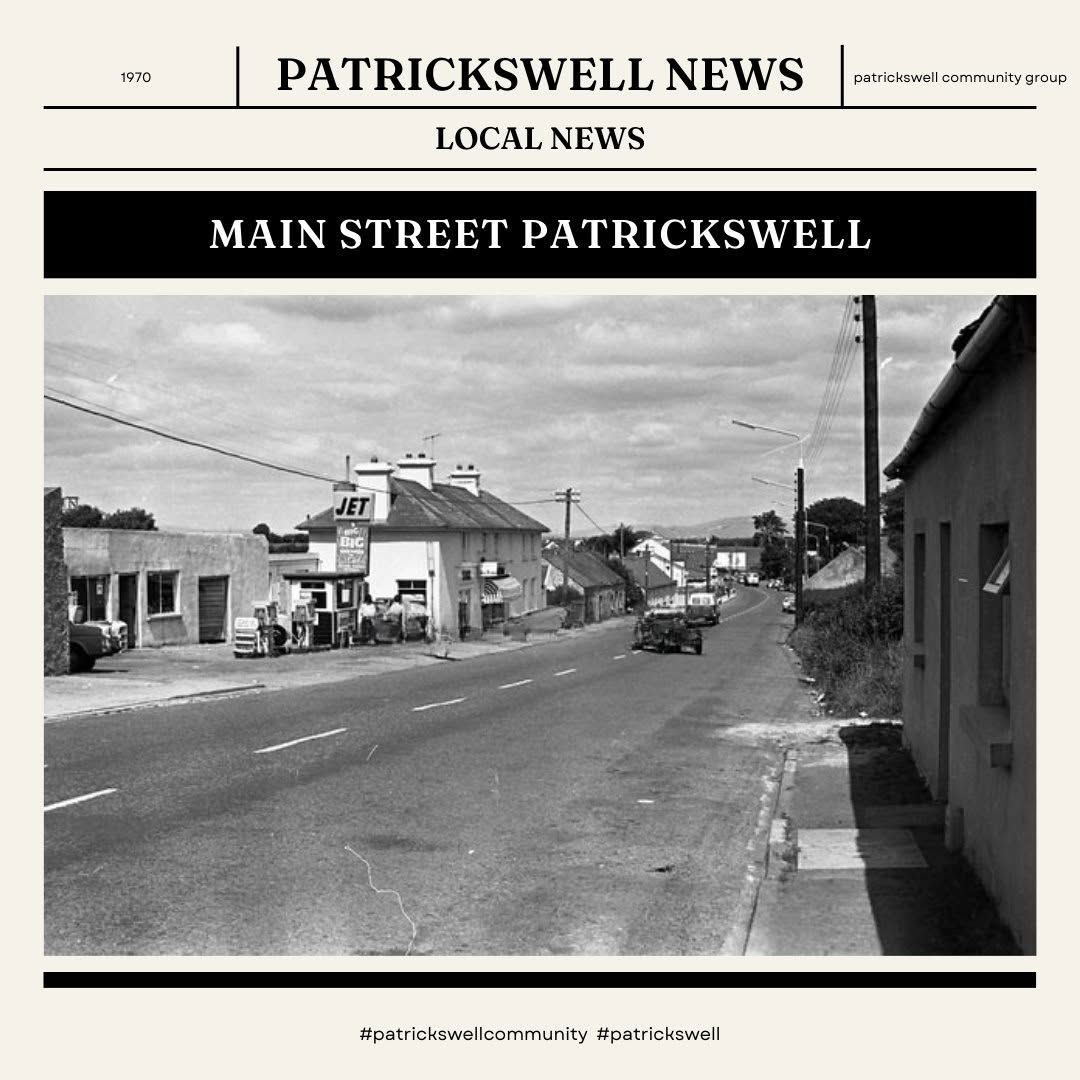
Patrickswell provides an interesting example of this wider challenge at the moment.
The village has waited a long time for improved facilities. The proposed sports facilities in the lands in Lisheen Park contain many excellent elements. There is strong planning theory and community support for additional pitches, changing facilities and improved recreational amenities.
The plans have also incorporated proposals for a playground in the same project. Not everyone agrees it is the right choice.
There are certainly advantages associated with the proposed playground location. It is close to the National School, Playschool and Afterschool facilities. It sits on existing pitch facilities and would help create a genuine recreational destination.
But many in the community question if this is the right location for the villages playground facilities while other supporters suggest if this is the location it will need exceptional security measures not usually incorporated in design for community playgronds.
With the opportunity created for Patrickswell by newly acquired lands, is there a better location now for the playground?
That is the question before the councillors at the moment as part of the planning (Part VIII) process. Strictly applied, it would be consistent with the planning rules to give the playground the go ahead. But councillors are entitled, even one might say should, to look at a broader context in making their decision whether to approve, reject or amend the current proposal. They will likely be influenced by the planning cohesion of the village/town, the split of opinion in the public about the playground and the relative funding feasability of both options.
Nobody disputes that Patrickswell needs additional play facilities.
The question is not whether a playground is needed. The question is whether changed circumstances allow us now to achieve a better outcome - both short-term improvements and a more suitable longer-term outcome.
Since much of the earlier planning work was undertaken, Limerick City and County Council has acquired approximately 70 acres of strategic land at Attyflin/Lissard. Those lands have the potential to accommodate significant housing, community facilities, active travel connections, public open space and potentially future public transport infrastructure.
In simple terms, those lands are to become a new future centre of gravity of Patrickswell. That does not automatically mean earlier ideas are wrong. But the entry of those lands into the equation creates an opportunity to ask whether the village can secure the best of both worlds by moving the location of the playground to those lands.
Patrickswell is not of a scale that it is likely to secure funding in the near term for two full scale playgrounds. Even if it did, would splitting the children of the villages across two very different sites be a desirable outcome in the interests of creating an inclusive community.
But can meaningful improvements be delivered in the short term at Lisheen Park while preserving the opportunity to create a larger village-scale destination park and playground as part of the future development of Patrickswell?
That is not a debate about delay.
It is a debate about sequencing.
It is a debate about how limited public resources can achieve the greatest possible benefit for the community.
Thinking in Phases Rather Than Absolutes
Too often public debate presents choices in absolute terms: build this or build nothing; proceed or reject. Life is rarely that simple. A better question is often: what can we do now, and what should we preserve for later?
In Patrickswell, there may be opportunities to deliver lower-cost improvements, recreational amenities or community uses in the short term while retaining flexibility regarding other larger investments.
The objective should not be to choose between today’s needs and tomorrow’s ambitions.
The objective should be to secure both: short-term wins and longer-term vision; immediate improvements and strategic planning; progress today and capturing and reflecting the opportunity for tomorrow.
Of course, even if planning is granted for Lisheen Park does not mean that funding to deliver it – the next hurdle for the project – will be easily secured from national government. On the other hand, the installation of such amenities into housing plans for Attyflin is likely to increase the value of the large body of state lands there and therefore is likely to be easier to fund. In practical terms, this is likely to put both on similar delivery time-tables.
Building Places, Not Just Projects
As Mayor, I increasingly find myself thinking less about individual projects and more about how projects connect together. A playground is not simply a playground. A sports pitch is not simply a sports pitch. A walking trail is not simply a walking trail.
Together, they shape how people move through a community. They influence where people gather, where children play, where businesses locate, where people want to live and where future investment follows. They help create the identity of a place.
Looking Towards 2040
Patrickswell is a place I know well. Although I played my sport with nearby rivals Mungret and while Raheen was closer to our home, Patrickswell was the nearest village to where I grew up.
Indeed, my mum’s farm has a postal address of Patrickswell, albeit located some 4 kilometers from the lands in question. So while the lands are not near enough to have their value influenced by the new project, growing up on that farm was near enough for me to understand personally the dynamics of the village and its potential.
Patrickswell was where we used the post office, where we filled the car with petrol and where my parents spent many happy hours socialising with friends.
Like many people from the surrounding countryside, I have watched the village evolve over decades. That is perhaps why I believe we owe it to future generations to think not only about this next project in a short-term vacuum, but about how it fits into the next five, ten or twenty year plans.
That is where the arguments for the new lands become more compelling which forces us to give serious consideration to them as the best location.
Like Jaime Lerner in Curitiba, I do not believe communities should be asked to choose between immediate progress and longer-term ambition. The challenge for public leaders is to find ways of achieving both.
Sometimes the best decisions are not those that choose between competing visions.
They are the ones that find a compromise to advance both visions even if the outcome is different to that before the circumstances changed.
That, ultimately, is what strategic leadership is about.
#MoreforLimerick #DEM
