Limerick is at a Budgetary Cross-Roads with Hard Decisions needed -
They say “Follow the Money”. With Budget 2026 agreed, I discuss the perilous budgetary positions of local authorities in Ireland - including Limerick.
In my new "FROM YOUR MAYOR'S DESK" series, I will explain my priorities for 2026, the reasons for my optimism for Limerick's future but also my concerns about how we get there.
But first it is Budget 2026: a comfort blanket for Limerick but not a long-term solution.
READ MY FULL BUDGET SPEECH HERE: Limerick 2026 budget speech.pdf
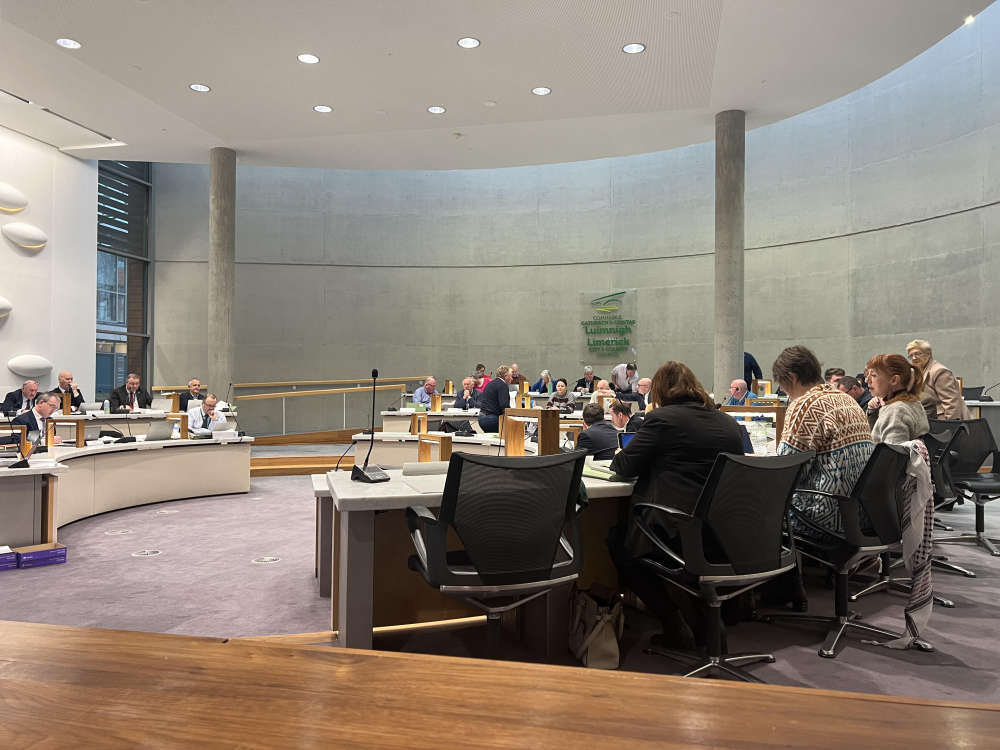
Budget Day November 21, 2025 - Photo from Limerick's Live 95
By the time I addressed Council on Budget Day, my second, I had gained many new insights compared to 2024.
While Limerick and all of the team at Limerick City County Council can rightly be proud of what was delivered in 2025, neither the Executive nor the elected Council can allow delivery alone during 2025 to obscure a harder truth: our finances have been weakened over many years, and 2026 is about buying time — not solving the problem.
Yes, almost €1 billion in services were delivered last year — homes repaired, streets cleaned, libraries kept open, festivals supported, communities backed, public housing rents paid. That work matters, and the staff of Limerick City and County Council deserve real credit for it . But delivery, important as it is, does not by itself make a system sustainable.
I went into Budget day receiving clear advice. At the highest level, officials were clear to me that the budget well had run dry. Don’t look Mayor for more operating efficiencies or raid stretched capital or similar reserves for more current spending, they said.
Further weakening of a weak Budget situation
However, on the day, representatives of the majority of councillors in the Chamber met with officials privately. They then proposed, as was their right, changes to the budget presented.
Everyone had been kept informed of the outcomes from seeking one million euros of unidentified efficiencies as a last minute compromise to avoid rates increases for 2024’s Budget day. There was good news: improved rental collection and other income had appeared. Worryingly though the remaining gap had been delivered by hundreds of thousands in payroll savings. I have not been able to hide my concerns about how this must mean reduced delivery for the residents of Limerick as using the available budget headroom for new hires was not the choice taken by officials in charge of such decisions. How too can we argue for national funding for more human resources to deliver better and faster if we have not used up our own budget first?
Naturally, like everyone else, I would love to have been proposing more work on roads or other services but the advice for 2026 was clear – there was no more money. Governing is hard.
Nonetheless, coming out of rooms with the senior officials, the majority grouping of councillors chose not to prudently replace my spending choices with others but rather to just increase spending for areas like road maintenance and burial ground maintenance.
They also advanced to 2026 (at a cost of over €200,000 each year) our multi-year plan to give city councillors an increase in €10,000 or so in their own discretionary spending allowance. This gave them much coveted parity with their county colleagues of €40,000 each to spend on pet projects.
The combined clear advice from officials and myself had been to postpone that for this year given the hardships caused on others by the fees and rates increases already being proposed.
Demands to fund this by insisting on raiding the much-needed cash reserves of Limerick Twenty Thirty (about to embark on a multi-million construction contract) became a red-line for me and many other councillors on the day. That demand was withdrawn after much discussion in private rooms. Nothing for me could have sent a more dangerous message to private sector partners about how undue political interference might become a reality in the company’s affairs making it less “bankable” at a time of much needed investment.
In the end, with agreement from senior officials, capital reserves were further raided and more unidentified efficiencies promised to fund the demanded spending increases – risking putting the finances on even more shaky ground for 2026. Butu on better news, on the other hand, after final opposition from some quarters of FFG receded, proposed rates increases were agreed for which all Councillors deserve a lot of credit.
Everyone knows the final decision on the right balance is a function reserved to the majority in the council chamber.
But the change in Limerick’s government system means a political mayor can (or I would say should) express concerns so people understand where they stand.
At local government, there is no role for and no opinion from the Fiscal Advisory Council. But why conceal that I worry myself at what cost will the decision to fund this extra current spending come?
But we are where we are. Decisions are to be owned and democracy is democracy.
Need for a new multi-year reset plan
Now even harder choices for years to come and tougher negotiations with central government and others will be needed to put the finances of Limerick on a sustainable basis.
And that job must begin not in summer 2026 but early this year. I shall be asking the Director General, as our Accounting officer, to bring forth proposals for consideration by me and our strengthened Corporate Policy Group very shortly.
The Wells have run dry
The critical message of the Budget speech was:
“We can no longer ignore serious structural problems which have been building up for years in our budget.”
Those problems did not arise overnight. They are not the result of one bad year. Over time:
- annual surpluses steadily declined, removing the ability to build buffers for the future,
- borrowings were taken on for chosen projects without matching income streams to repay them,
- one-off cash receipts were used to meet pressing needs, rather than to repair the underlying balance sheet,
- reserves were gradually depleted and are now largely committed to existing liabilities.
As I said in the Chamber, this has all come home to roost, just as inflation, population growth and service demand continue to rise faster than our income.
Now is the time to start boldly fixing our problems.
2026 is a holding year — not a cure. The decisions taken were
“…recommended to help us buy time… and develop and decide on our own multi-year corrective action plan.”
That is uncomfortable honesty, but necessary honesty.
Without corrective measures, projections had showed a deficit of €8–9 million — equivalent to a 15% or so increase in commercial rates across the board. The balanced budget adopted avoids that cliff edge, but only by making difficult, temporary choices .
If we treat 2026 as “job done”, we will be back here next year facing even starker options. This year must be used deliberately and intelligently — not drifted through.
Calling this out is not about blame. It is about responsibility.
There is no obvious white knight coming with a bailout. National under-funding of local government remains real, but that does not absolve us of the duty to act decisively at local level .
We are at a crossroads. As I said in my budget speech:
“We can decide to struggle again through just another budget… or we can use this year wisely to make significant changes in how we operate, how we finance ourselves and how we provide critical services.”
That choice is the real story of Budget 2026.
While operational reform is already underway — it must accelerate
And though 2026 is constrained, it is not stagnant. Even within tight finances, I have recommended changes to the Director General in how we work, not just how we spend, proposing:
- better coordination of housing delivery and housing maintenance into unified operational structures
- publication of clearer performance targets and KPIs
- reform of public-realm management to reduce duplication and inefficiency
- strengthening of programme management through an enhanced Mayoral Programme Management Office
- earlier and fuller financial transparency so future decisions are not made in the dark
These organisational reforms matter because allocating more money without fixing how we operate will not either solve our problems.
At the same time, we are still innovating: accelerating housing reuse, piloting smarter finance solutions, advancing place-based interventions like Abbeyfeale and Kings Island, and continuing major regeneration projects across Limerick — all while protecting core services as best we can.
A call to action — not complacency
Budget 2026 gives Limerick breathing space — nothing more. What we do with that space will determine whether we repeat the mistakes of the past or finally put our finances on a sustainable footing.
That will require:
- leadership across all political and public administration actors willing to face uncomfortable truths
- organisational change, not just annual adjustments
- honest engagement with communities and businesses about what can — and cannot — be funded
- a shared commitment to put place before politics in every decision
If we do that, this holding year can become the foundation for real reform. If we don’t, the choices ahead will only get harder.
The future is still in our hands.
READ MY FULL BUDGET SPEECH HERE: Limerick 2026 budget speech.pdf
John A MORAN
Mayor of Limerick
29th December, 2025
